
Zero Waste Analytics at the 11th Multi-Stakeholder Forum on Science, Technology, & Innovation for the Sustainable Development Goals
On May 6-7th 2026, Xiuwen Hu represented Zero Waste Analytics to attend the 2026 United Nations STI Forum at UN HQ in New York City.
Scroll down below to view what insights we gained from this valuable experience.


Photo with other outstanding
Youth Delegates present

Photo with President of ECOSOC and Co-Chairs of 11th Forum

3 Lessons from the 2026 UN STI
Compiled from the forum, we highlight the key insights unique to us gained in those conversations. What Zero Waste Analytics learned from this experience, and where we are taking our future.
Lesson 1 - Effective Integration of Technology
Even at the very beginning of the forum, Dr. Rita Orji's keynote regarding the integration of AI in developing countries resonated with me strongly. She presented the fact that those algorithms and models, developed mostly in affluent, technologically advanced countries, were not suited to the local environmental, economical, or cultural contexts of developing countries that sought to benefit from this technology.

Even though my initiative was not focused on Artificial Intelligence, I saw transferrable patterns of thinking that highlighted certain naïveté's in my earlier thinking. Generalized solutions were not made capture the nuances of localized, unique problems. The best solutions are usually designed with the contextual information, problems, and beneficiaries in mind.
Going forward, Zero Waste Analytics will begin an effort to reduce food waste in the Indian Springs School community. Even though a blanket solution is ideal, a smaller, concrete first step will be essential to a strong foundation for expansion.
Lesson 2 - Long Term Considerations
The session on urban innovation discussed a necessary components required for pilot projects to survive in the long-term: the capability of such projects to serve as supports for institutional learnings instead of merely acting as a standalone demonstrations. The cruciality of a "science-policy" interface is also key, as it is what fundamentally enables scientific knowledge to truly inform better policies for organizations and communities alike.
Thus, Zero Waste Analytics is striving in the long-term to serve a dual purpose: to provide a consistent system that helps reduction of waste, and also to teach students in the local community the sustainable potential of technology in this modern era. Recruiting more people, and including younger students helps this initiative stay firmly rooted in this school community, but also brings in the possibility of spreading branches to help a larger surrounding area.

Lesson 3 - Optimizing for one metric alone is dangerous
Session 1, which focused on the transformation of water systems, brought up an interesting point. Low-cost solar irrigation technologies are undoubtedly extremely cost-effective, but in turn accelerate the depletion of groundwater if not carefully implemented and govern. Optimally pursuing a specific metric for a problem may cause parties to ignore other key "hidden costs", that complicate the solutions presented.
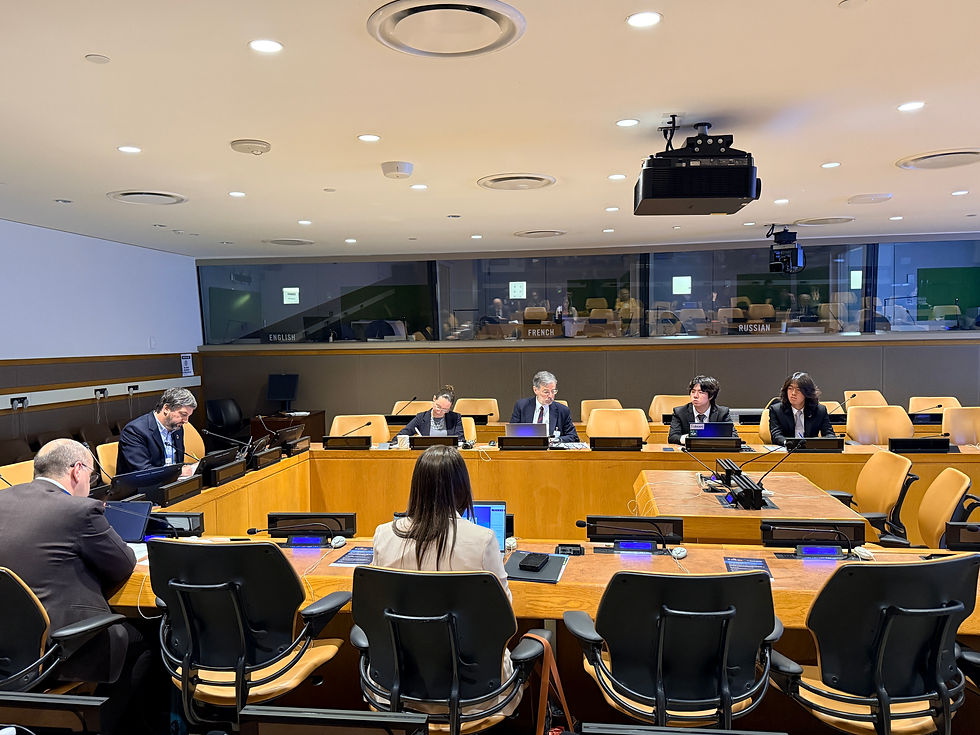
Attending a side-event discussion regarding the rise of research in developing countries.
For us:
Similar to the example of irrigation systems, creating a model that blindly optimizes for minimum amounts of food waste introduces potential new problems, such as the dilemma of under-preparation and shortage. Cooking portions too big risks waste, yet the solution of reducing portion size may result in days where a restaurant does not have enough food to serve. A sophisticated model is not the goal for Zero Waste Analytics, but rather one that can deliver the best results in real-life: one that is easily interpretable, provides clear actions, and contains safeguards against unexpected daily occasions. Moving on, we will make active decisions focusing more on consistency, instead of perfection.